

Chicago is an amazing city packed with numerous attractions and a wide variety of delicious food. Whether you’re drawn to bold architecture, deep-dish pizzas, or stunning city views, this city has it all. Chicago, also nicknamed “The Windy City,” is home to towering skyscrapers, a modern skyline, and hidden underground wonders—meaning visitors can never get bored here.
In this blog, we’ll explore ten fascinating facts that make Chicago unforgettable, cool, and perfectly unique. While Chicago is famous for its chill, these facts are sure to warm your curiosity. Let’s dive in!
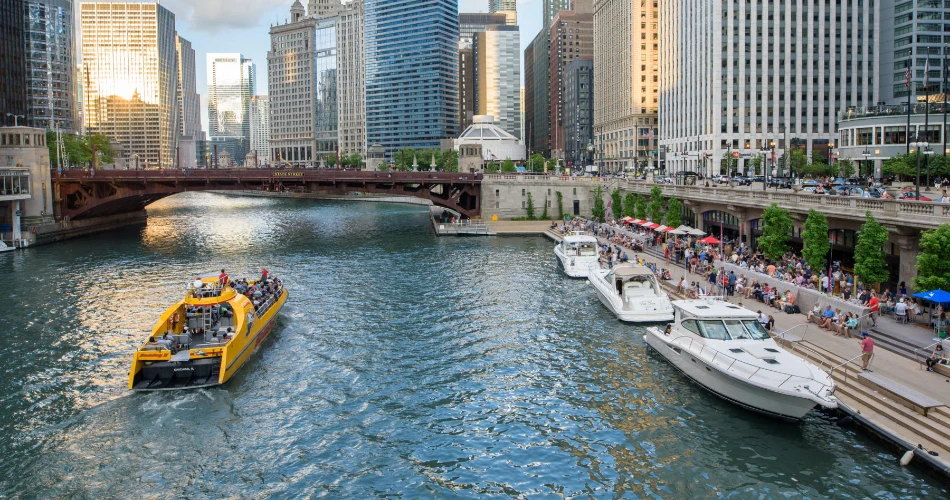
The Chicago River
The Chicago River runs directly through the heart of Chicago and divides many major neighborhoods. The river is famous for its unusual engineering history: in 1900, Chicago engineers reversed its flow to protect the city’s drinking water in Lake Michigan.
Today, the river flows toward the Illinois Waterway and eventually connects to the Mississippi River. The Chicago River is crossed by many movable bridges and is dyed green every year for the city’s St. Patrick’s Day celebration—a tradition that began in 1962. The river remains one of Chicago’s most iconic landmarks.
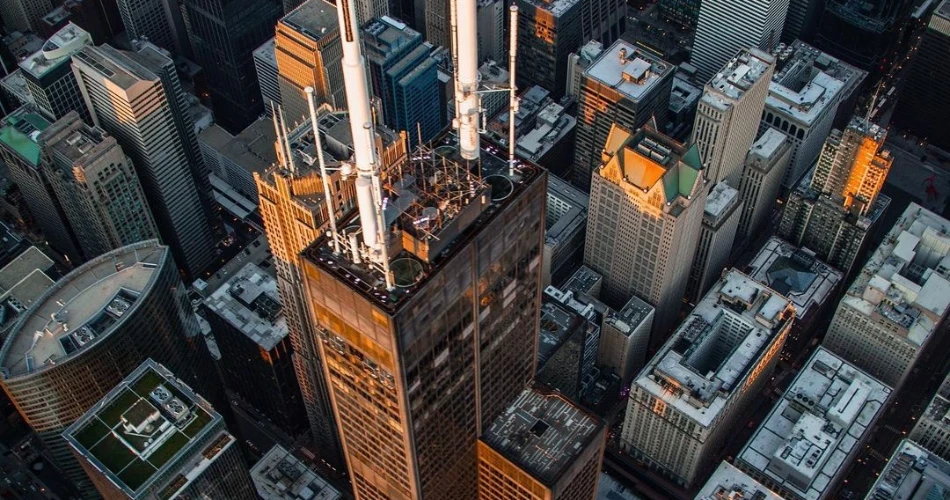
The Top of Willis Tower
Willis Tower, located in downtown Chicago, is one of the tallest buildings in the Western Hemisphere. Opened to the public in 1973, it was originally named the Sears Tower. The building rises 1,450 feet without antennas and 1,729 feet including them.
With 110 floors, Willis Tower uses a bundled-tube structural system, allowing visitors to reach the Skydeck on the 103rd floor. The Skydeck features The Ledge, glass observation boxes that extend outward from the building, giving guests a thrilling view straight down to the streets below.
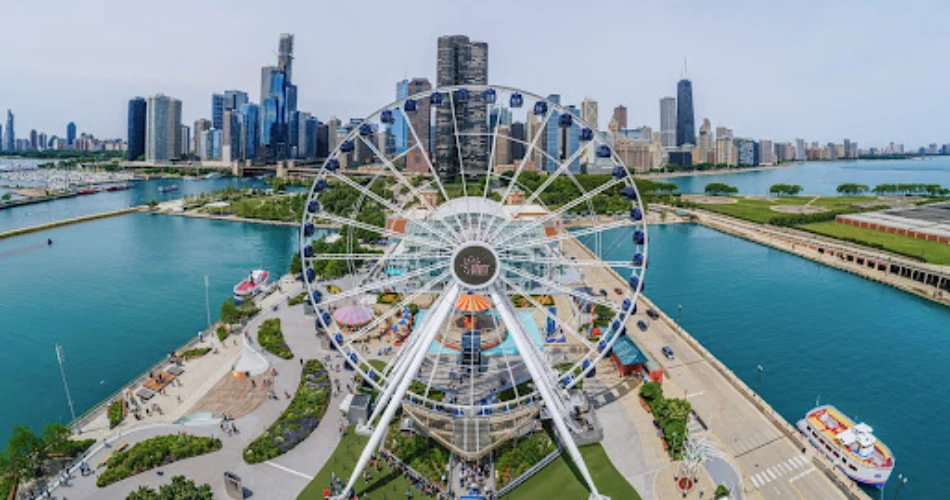
The Invention of the Ferris Wheel
If you love Ferris wheels, you’ll be fascinated to know the first one was designed by engineer George Washington Gale Ferris Jr. for the 1893 World’s Columbian Exposition in Chicago. Standing 264 feet tall, the wheel introduced a revolutionary form of steel amusement design.
It had 36 passenger cars, each holding about 60 riders, and was powered by large steam engines. More than one million people rode the Ferris wheel during the exposition. While the original wheel was eventually dismantled, it left a lasting mark on amusement history.
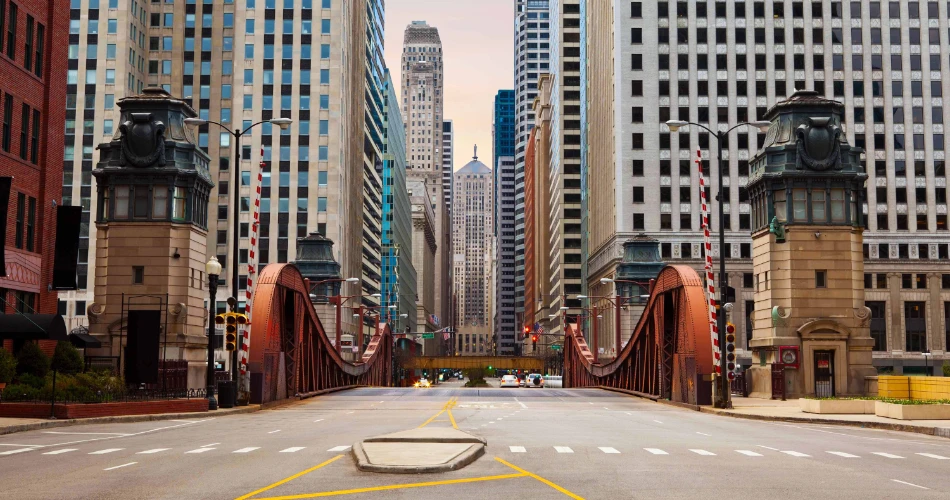
Batman’s Gotham City and Chicago
Several modern Batman films used Chicago as the visual model for Gotham City. Director Christopher Nolan selected the city for major scenes in Batman Begins and The Dark Knight.
Lower Wacker Drive was used for high-octane chase sequences, the Chicago Board of Trade Building appeared in exterior shots, and the Marina City towers were featured during key scenes involving the Joker. Interior scenes were filmed at the old Chicago Post Office. The city’s architecture helped create a realistic and modern Gotham City on screen.

Walt Disney Was Born in Chicago
Walt Disney was born in Chicago’s Hermosa neighborhood on December 5, 1901. His parents, Elias and Flora Disney, lived in Chicago during Walt’s early childhood before moving to Missouri. He returned as a teenager and attended McKinley High School, studying drawing and photography.
Disney also took evening art classes at the Chicago Academy of Fine Arts and briefly worked as a cartoonist for a local publication. His early Chicago experiences shaped his future in animation.
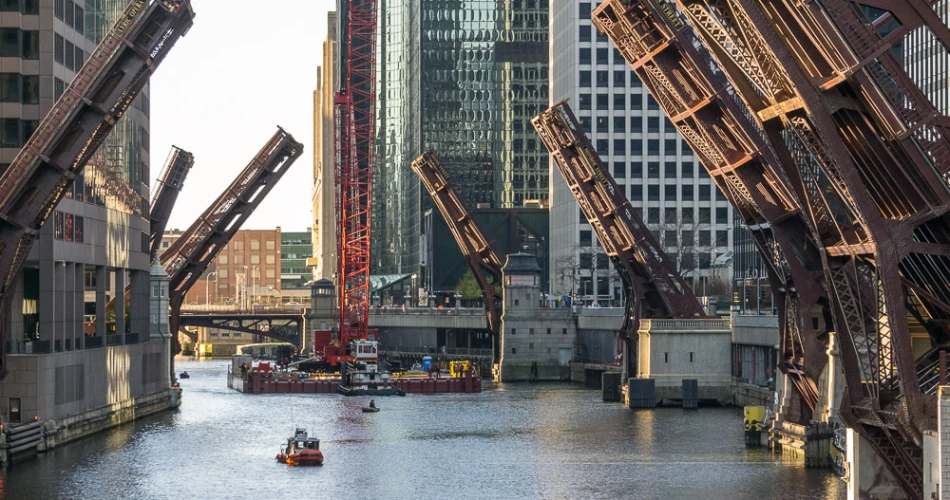
Chicago’s Movable Bridges
Chicago is home to one of the world’s largest collections of movable bridges. Most cross the Chicago River and support major traffic routes. Many use a bascule design, which allows the bridge to lift with counterweights.
A notable example is the Michigan Avenue Bridge, now called the DuSable Bridge, which opened in 1920. Bridge tenders operate the machinery to raise the spans for boat passage several times a year during seasonal boat migrations. These bridges remain essential for city transportation and are a defining feature of Chicago’s landscape.
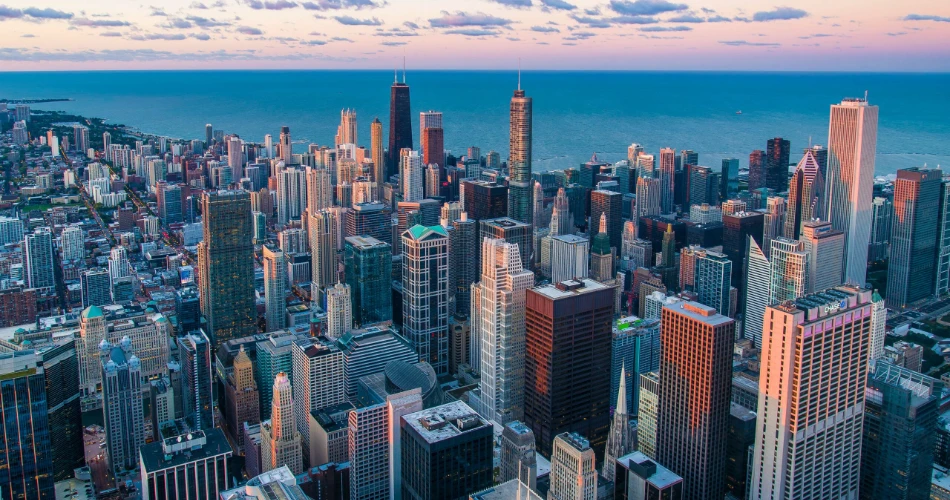
The Windy City” Nickname
Chicago’s nickname, “The Windy City,” appeared in newspapers during the late 19th century. The term originally referred to boastful or long-winded politicians rather than weather.
It gained national attention during the competition for the 1893 World’s Columbian Exposition, when journalists from New York frequently used it to criticize Chicago’s promotional efforts. While the nickname wasn’t weather-based, Chicago does experience strong winds influenced by Lake Michigan.
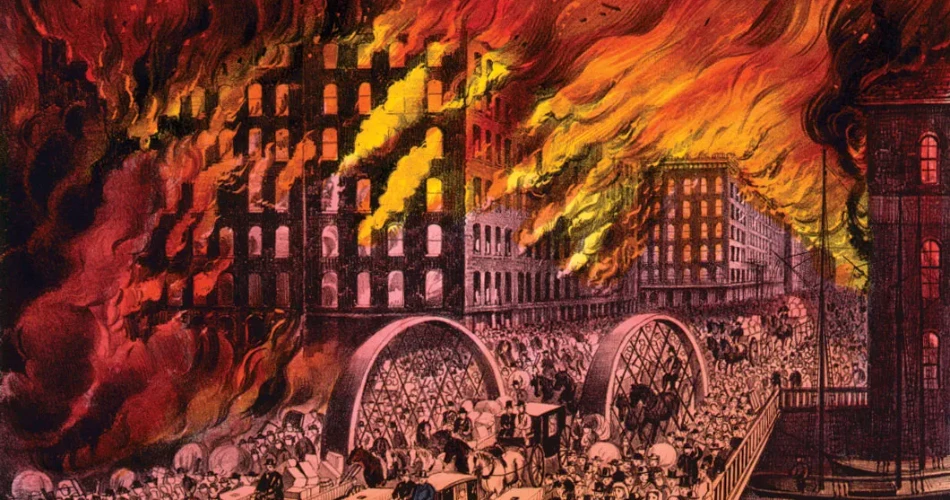
The Great Chicago Fire
The Great Chicago Fire began on October 8, 1871, in a barn on DeKoven Street. Fueled by wooden buildings and strong winds, the fire spread quickly through the city’s business and residential areas.
It burned for two days, destroying roughly 3.3 square miles, killing about 300 people, and leaving over 100,000 residents homeless. The Chicago Water Tower survived the blaze and became a historic symbol. The city rebuilt with new building codes, and the fire remains one of Chicago’s most significant historical events.
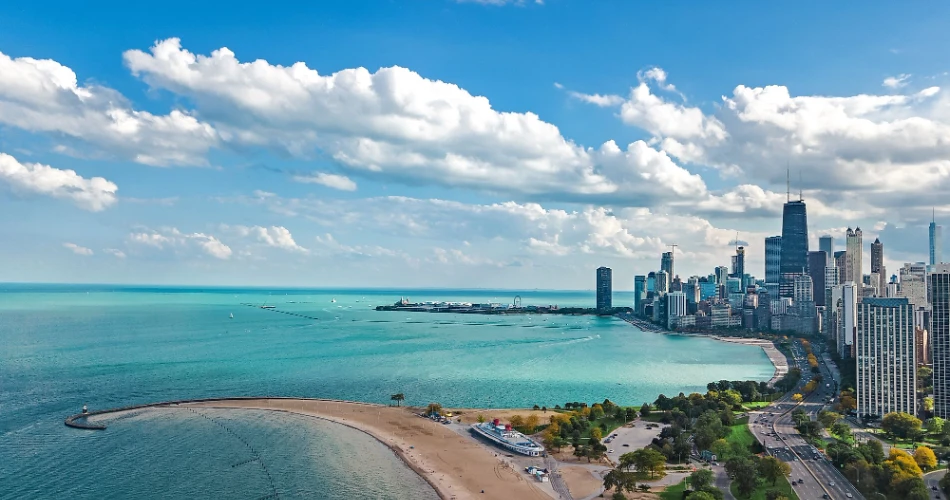
Lake Michigan
Lake Michigan lies along the eastern edge of Chicago and is one of the city’s most prominent natural landmarks. As one of the five Great Lakes, it is unique because it is the only one that is completely within the United States, touching the shores of Illinois, Indiana, Michigan, and Wisconsin. The lake provides drinking water, recreational opportunities, and scenic views that define Chicago’s waterfront.
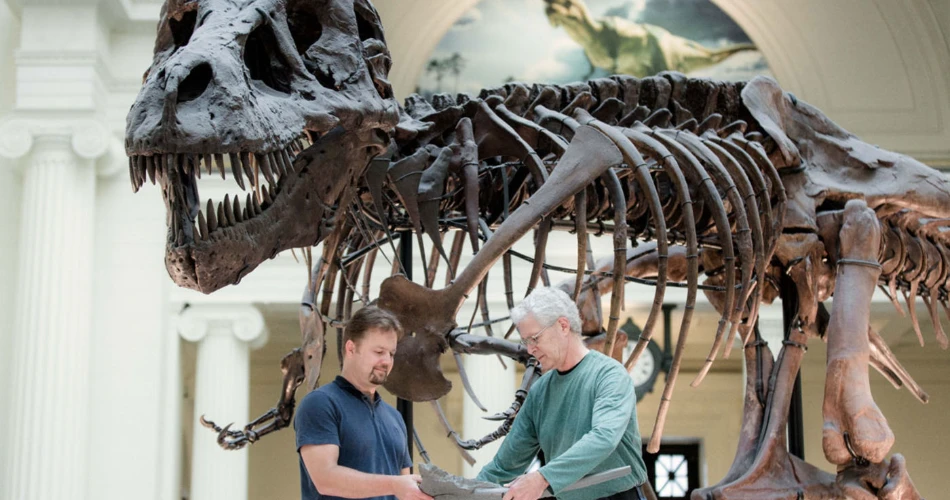
The Field Museum and the Tyrannosaurus Rex Skeleton
Chicago is home to The Field Museum, located on the Museum Campus and opened in 1894. Its collections include millions of scientific specimens from around the world. One of its most famous exhibits is SUE, a nearly complete Tyrannosaurus rex skeleton.
SUE measures about 40 feet long and stands roughly 13 feet tall at the hips. Discovered in South Dakota in 1990, the fossil was acquired by the museum in 1997 after a high-profile auction. Paleontologists extensively studied SUE before the exhibit opened to the public.
In a nutshell, Chicago is home to countless fascinating places and stories that make it truly special. These facts show why the attractions in Chicago are exciting, historic, and unforgettable for every visitor.
Ready to Explore Chicago? Book Your Stay at Skylark Motel and Discover the City’s Best Attractions!